
- /
The Best Neighborhoods in Pacific Grove
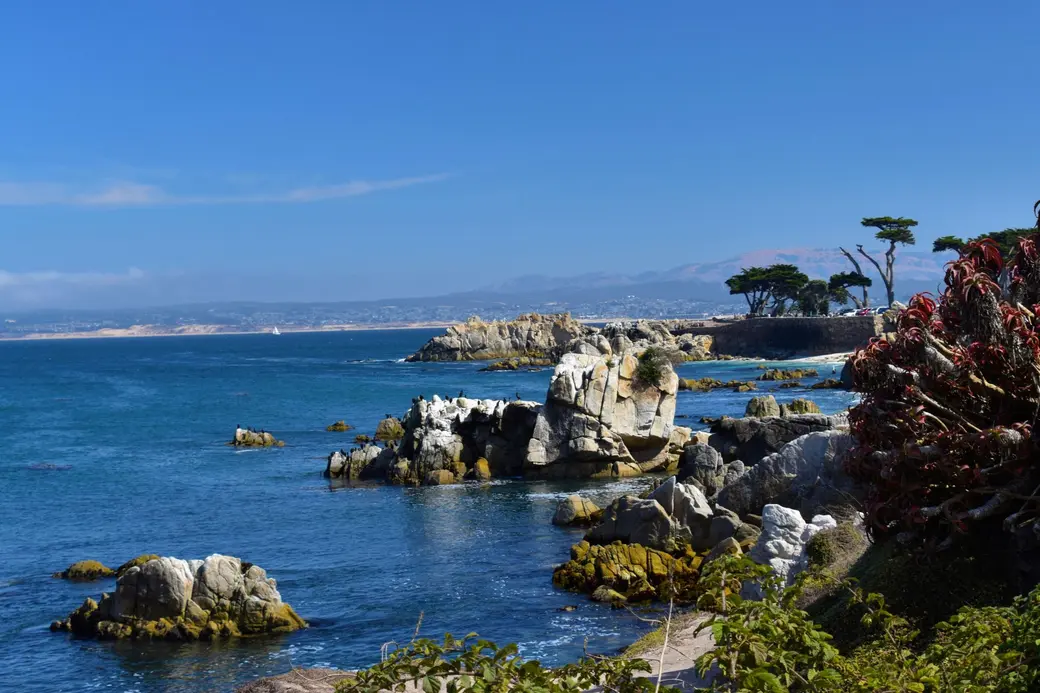
Pacific Grove is a small city, roughly three square miles, and it is more internally varied than most buyers realize when they first consider it. The difference between a home on the coastal bluff and a home six blocks inland is not just a price difference — it is a different daily experience of the place. The difference between the Victorian district and the quieter blocks above Lighthouse Avenue is the difference between living in a piece of architectural history and living in a neighborhood that simply feels settled and comfortable.
This guide covers the four distinct areas that define Pacific Grove's residential character. Each is worth understanding on its own terms before deciding which suits your life.
The Ocean View Boulevard Corridor
The most dramatic real estate in Pacific Grove sits along and near Ocean View Boulevard, the coastal road that traces the city's western edge from Lover's Point south toward Asilomar. The views here are exceptional. The Pacific Ocean is present from the front rooms of homes along this corridor in a way that defines the daily experience of living in them.
The housing stock along the corridor is a mix: some Victorian-era homes that have been on these lots since the city's early days, some mid-century structures, and the occasional more recent build. What they share is proximity to one of the most consistently beautiful walking routes on the Monterey Peninsula. Residents here walk to Lover's Point, past the tidepools at the point's base, and along the coastal trail south toward Asilomar as a matter of daily routine rather than a weekend destination.
The price premium for this location is real and consistent. Oceanfront and near-ocean homes along the corridor command some of the highest per-square-foot prices in Pacific Grove and turn over infrequently. Buyers who prioritize direct coastal access and are willing to accept that their budget will buy less square footage here than it would three blocks inland will find that the trade-off is worth it once they have lived it for a season.
The Lighthouse Avenue Core
Lighthouse Avenue is Pacific Grove's main commercial street, and the residential blocks surrounding it form the neighborhood that most clearly embodies what distinguishes Pacific Grove from its more famous neighbors. This is the part of the city that feels like a town that has been inhabited continuously, without interruption or reinvention, for more than a century.
The residential streets running north and south off Lighthouse between downtown and the coast are walkable in the most functional sense. The farmers market, the hardware store, the coffee shops, the library, and the handful of restaurants that locals return to week after week are all within a few blocks. A buyer who moves to this part of Pacific Grove and does not own a car for daily errands is making a reasonable choice.
The housing here is varied in scale and era — smaller cottages and bungalows mix with larger Victorian homes on the same block. Prices reflect the walkability premium but remain below what comparable access would cost in Carmel. This is the neighborhood that buyers who prioritized Pacific Grove in the community comparison post are usually picturing when they imagine living here.
Pacific Grove is more internally varied than most buyers realize. The right neighborhood depends not just on budget but on what daily life should feel like.
The Victorian Historic District
Pacific Grove's historic residential district covers much of the city's older inland blocks and contains one of the most intact collections of Victorian-era residential architecture in California. The homes here, many of them built in the late 1800s and early 1900s when Pacific Grove was a Methodist retreat community, have a scale and character that is genuinely irreplaceable.
Buying in the historic district means buying a piece of that architectural history, with the obligations that come with it. Properties in designated historic districts are subject to design review for any exterior changes, which means that paint colors, additions, fence heights, and landscaping modifications all require approval from the city. This process is not as exhaustive as Carmel's, but it is real and should be factored into any renovation plans before purchase.
What the historic designation protects is also its primary appeal. The blocks here have not been modernized, infilled with out-of-character buildings, or stripped of the features that make them feel like they belong to a specific time and place. For buyers who value that kind of architectural coherence and are willing to work within its constraints, the historic district offers something that new construction cannot replicate.
Price points here are generally more accessible than the coastal corridor, and the lots tend to be modest in size. The homes themselves range from carefully preserved originals to properties that have been renovated thoughtfully over decades. Condition varies considerably, which creates both opportunity and risk for buyers who are not experienced evaluating older construction.
The Upper Residential Blocks and Forest Hill
The blocks above Lighthouse Avenue, rising toward the higher elevations of the city and into the area generally referred to as Forest Hill, offer a different version of Pacific Grove: quieter, more forested, and somewhat removed from the coastal energy that defines the neighborhoods closer to the water.
The housing here is generally more recent than in the Victorian district and more varied in style. Lots tend to be larger, which provides more privacy and more outdoor space than the compact Victorian-era blocks closer to Lighthouse. The trade-off is that walkability to the downtown core is reduced — not impossible, but not the ambient walkability of the neighborhoods closer to the center.
Price points in this part of Pacific Grove can be meaningfully lower than the coastal corridor for comparable square footage, which makes this area worth serious consideration for buyers whose budget is stretched by ocean-proximity premiums. The neighborhood is quieter, the pace is slower, and the sense of being in a forested coastal setting rather than a coastal village is more pronounced. For buyers who value those qualities over proximity to the daily activity of Lighthouse Avenue, this part of the city delivers them reliably.
Choosing the Right Part of Pacific Grove
The four areas above are distinct enough that a buyer who falls in love with Pacific Grove as a concept should spend time in each before narrowing down. The experience of an Ocean View corridor morning walk is different from the experience of walking to the farmers market from a Victorian-era block two streets off Lighthouse. Both are genuinely Pacific Grove. Which one suits a buyer's life depends on how they want to inhabit the place.
The Ruiz Group knows Pacific Grove's residential neighborhoods in detail and is happy to walk through the distinctions for any buyer who is trying to decide where within the city makes sense. That conversation is most useful before the search narrows, not after.
Related reading: Pacific Grove vs. Carmel vs. Monterey: Which Town Fits Your Life? · What Nobody Tells You Before Moving to the Monterey Peninsula · Nine Worlds: Understanding the Microclimates of the Monterey Peninsula · What's With All the Name Plaques on PG Houses? What to Know Before Buying a Historic Home in Pacific Grove
GET MORE INFORMATION
