
- /
Carmel's Neighborhoods: A Street-Level Guide
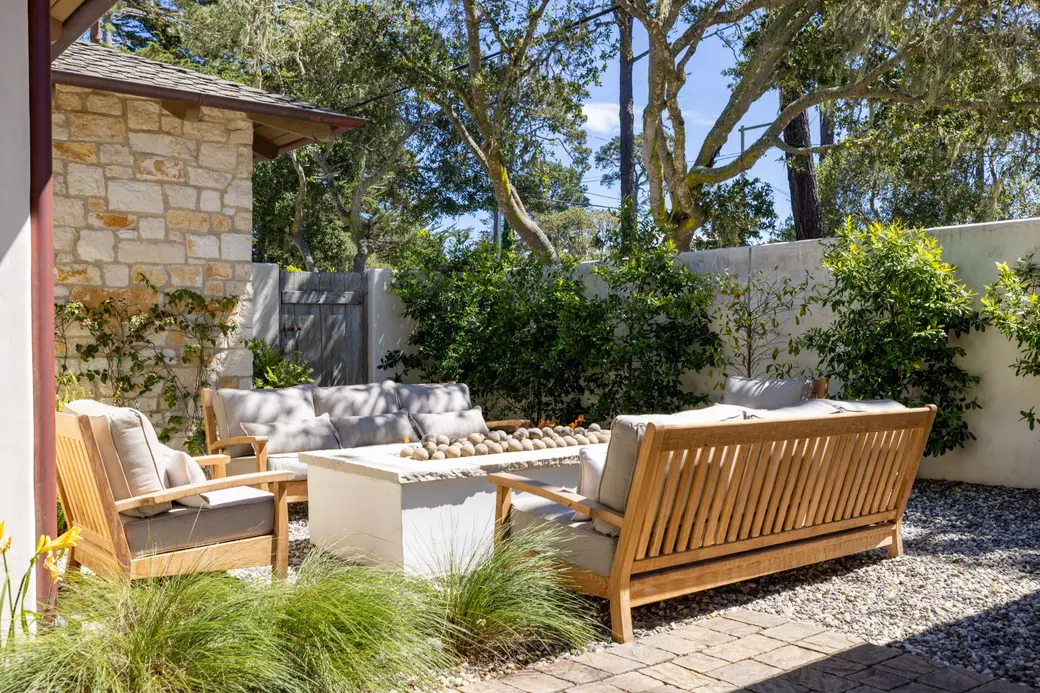
Carmel-by-the-Sea is one square mile. The village is small enough that a brisk walk from one end to the other takes less than twenty minutes. And yet the internal geography of Carmel matters enormously to buyers — because within that single square mile, the experience of daily life varies dramatically.
Which blocks are genuinely walkable to the beach versus which require a car for every errand, which streets carry the most foot traffic from visitors and which feel quietly residential even in peak season, which areas offer the classic Carmel cottage character and which are defined by more recent development — these distinctions are not obvious from a listing address or a map. This guide covers them at the street level, for buyers who are past the general decision to buy in Carmel and are now trying to understand where within Carmel makes sense for them.
The Golden Rectangle: The Heart of the Village
The area Carmel agents and longtime residents refer to as the Golden Rectangle covers roughly the blocks between Ocean Avenue to the north, 8th Avenue to the south, Junipero Street to the east, and Camino Real to the west. This is the geographic core of Carmel-by-the-Sea — the blocks that define the village experience most completely.
Living in or immediately adjacent to the Golden Rectangle means the full village is genuinely walkable in every direction. The galleries on Dolores Street, the restaurants along San Carlos and Mission, the post office, the Tuesday farmers market, the Sunset Center — all of it is within a five-to-ten minute walk of almost any address in this area.
The housing stock here is among the most architecturally characterized in Carmel: the storybook cottages with low rooflines, the hand-carved wooden doors, the gardens that have been cultivated over decades. Lots are small and homes are modest in footprint by Peninsula standards, but the sense of being inside Carmel rather than near it is pronounced. Properties in the Golden Rectangle turn over infrequently and command prices that reflect both the location and the irreplaceable character.
The trade-off is proximity to visitor traffic. On summer weekends and during events like the AT&T Pro-Am and Car Week, Ocean Avenue and the surrounding blocks are busy. Residents in the Golden Rectangle live inside the activity rather than adjacent to it. For buyers who want the village experience at its most complete, that trade-off is acceptable. For buyers who prioritize quiet above all, the northeast residential blocks described below may be a better fit.
South of 10th: The Beach-End Blocks
The blocks south of 10th Avenue, running toward Scenic Avenue and Carmel Beach, occupy a different register from the village core. The streets here are quieter, the lots tend to be slightly larger, and the proximity to the beach is the defining feature of daily life.
Walking to Carmel Beach from the beach-end blocks is a matter of minutes rather than a matter of blocks-and-a-walk. For buyers whose primary motivation for living in Carmel is daily access to the beach — the morning walk, the dog off-leash at the water's edge, the sunset from the sand — this part of the village delivers that access more directly than any other.
The housing stock here includes some of the most coveted properties in Carmel: homes on the bluff above the beach with direct ocean views, and the blocks immediately behind them where the ocean is present without the premium of a front-row position. These properties are among the most expensive in Carmel and among the least frequently available.
The beach-end blocks are also where the village's visitor activity drops off most completely. By the time you are south of 10th, the gallery and restaurant foot traffic has receded. The streets feel genuinely residential. Neighbors know each other. The rhythm is set by the beach and the tide, not by Ocean Avenue.
Carmel is one square mile. But where within that square mile a buyer lives determines whether their experience is defined by the village, the beach, the bluff, or the quieter residential edges — and those are genuinely different ways of living in the same place.
Northeast Carmel: The Quieter Residential Blocks
The northeast quadrant of Carmel — the blocks east of Junipero Street and north of Ocean Avenue, running toward the Carmel Hill and the edge of Del Monte Forest — offers the most removed-from-visitor-traffic residential experience within the village boundaries. These streets are genuinely quiet, even on busy summer weekends.
The housing stock here is more varied than in the Golden Rectangle. Mid-century homes mix with cottages and more recent construction. Lots tend to be larger than in the village core, which means more garden space and more privacy. The tradeoff is that the beach-end walkability and the village-core proximity both require a longer walk than they would from the Golden Rectangle — manageable for most, but worth knowing before narrowing a search to this area.
Buyers who choose the northeast residential blocks tend to be those who want to live in Carmel but value quiet and privacy over proximity to the activity of the village center. They are willing to walk a few extra blocks for coffee or dinner in exchange for a street that feels genuinely peaceful when they come home. Many long-term Carmel residents who could afford the Golden Rectangle have settled in this part of the village precisely because it offers what the center cannot: the sense of being in a residential neighborhood rather than in the middle of a destination.
Carmel Point: Just Outside the Village, Distinctly Its Own
Carmel Point sits at the southern edge of Carmel-by-the-Sea, beyond the village boundary proper, curving around the mouth of the Carmel River toward the beach and the coastal bluff. It is technically outside the village's one-square-mile boundaries, but it is inseparable from the Carmel experience in the minds of most buyers who look here.
The Point offers some of the most dramatic residential settings in the area: bluff-top homes above the river mouth, properties with direct views of the Point Lobos headlands, and the quietest version of coastal Carmel living available at this price point. The streets here are not walkable to the village in the same way the beach-end blocks are. A car is needed for village errands. But for buyers whose priority is the landscape rather than the village infrastructure, the Point delivers a quality of setting that is difficult to find elsewhere.
The architecture on Carmel Point includes some of the most significant modernist residential work in the area. Properties here attract buyers who are as interested in architecture and landscape as they are in village access. The Carmel River State Beach at the base of the Point is one of the less-trafficked beach accesses on the Peninsula and a genuine daily amenity for residents who live close enough to use it.
Choosing the Right Part of Carmel
The decision about where within Carmel to buy is ultimately a decision about what daily life should feel like. A buyer whose vision is morning coffee on Ocean Avenue and an evening walk to the beach is describing the Golden Rectangle or the beach-end blocks. A buyer whose vision is quiet streets and a garden and a short drive to the village is describing the northeast residential area. A buyer whose vision is a dramatic coastal setting with maximum privacy is describing Carmel Point.
The Ruiz Group knows Carmel's residential geography in detail and is happy to walk through the specific distinctions for any buyer who is narrowing a search. That conversation is most useful before the search is confined to a single area, when there is still room to calibrate the fit between where a buyer thinks they want to be and where they would actually thrive.
Related reading: Living in Carmel: Your Guide to Schools, Culture, Recreation, and Daily Life · Pacific Grove vs. Carmel vs. Monterey: Which Town Fits Your Life? · The Architecture of Carmel
Categories
Recent Posts


GET MORE INFORMATION
