
- /
The Carmel Highlands: Area Overview
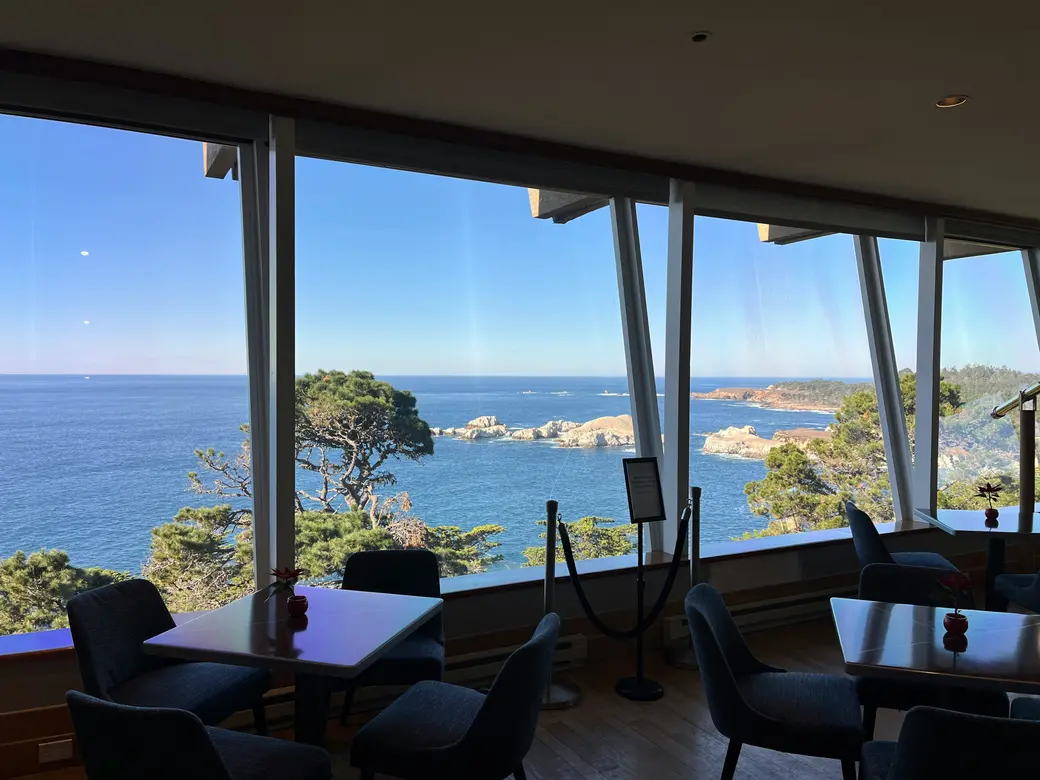
The Carmel Highlands occupy the coastal bluffs and headlands south of Carmel-by-the-Sea, beginning roughly where Highway 1 curves away from the village and continues south toward Point Lobos. It is among the most dramatically situated residential areas on the California coast — granite cliffs above the Pacific, Monterey cypress in the fog, the kind of setting that photographers seek out and buyers fall in love with easily.
It is also an area with a specific set of regulatory, practical, and lifestyle characteristics that make it meaningfully different from buying in Carmel proper, Pacific Grove, or Pebble Beach.
Jurisdiction: Unincorporated Monterey County
Carmel Highlands is unincorporated Monterey County land. It is not within the city limits of Carmel-by-the-Sea, despite the name and the geographic proximity. This distinction has significant practical implications.
Planning, permitting, and land use decisions for Carmel Highlands properties are governed by Monterey County rather than the City of Carmel. The County's planning department, the Carmel Area Land Use Plan, and the California Coastal Commission all have jurisdiction over development activity in the Highlands. The approval processes, timelines, and standards that apply here are different from those that apply to properties within the Carmel city limits — and in many cases more complex, given the coastal zone location and the sensitivity of the terrain.
For buyers with renovation or development intentions, understanding the permitting landscape before purchase is not optional. A project that would be straightforward in a less regulated area may require a coastal development permit, a biological assessment, a geological report, or review by multiple agencies. The buyer who discovers this after purchasing on the assumption that the renovation would proceed on a normal timeline is the buyer who is frustrated six months into the process.
Permitting requirements in Carmel Highlands depend on the specific parcel, its location within the coastal zone, and the nature of the proposed work. A pre-purchase consultation with a local architect or coastal permitting consultant is the most reliable way to understand what a specific project would involve before committing to a purchase.
The Coastal Commission
Carmel Highlands sits squarely within the California coastal zone, which means the Coastal Commission's authority is not a distant consideration. It is a direct participant in what property owners can do with their land.
New construction, additions that expand the footprint or height of existing structures, grading, demolition and reconstruction, and development near sensitive habitats or bluff edges all typically require a coastal development permit. For properties on or near the coastal bluff — which describes a significant portion of the most desirable properties in Carmel Highlands — the additional requirements around setbacks, erosion studies, and geological assessments add both time and cost to any development process.
The Coastal Commission's involvement is not inherently prohibitive. Significant and architecturally distinguished projects have been permitted and built in Carmel Highlands. But the process is longer and less predictable than buyers accustomed to inland or less-regulated environments typically expect. Buyers whose purchase value depends on the ability to expand or significantly modify the existing structure should model the full permitting timeline before the close of escrow, not after.
Carmel Highlands offers some of the most dramatic coastal settings available on private land in California. The regulatory framework that protects those settings is also the framework buyers must navigate to do anything significant with them.
Short-Term Rental Restrictions Under the 2024 Ordinance
The 2024 Monterey County STR ordinance significantly changed the short-term rental landscape for properties in unincorporated county land, including Carmel Highlands. The ordinance specifically prohibits new commercial short-term rental permits in Carmel Highlands — placing it among the communities in the county where new STR permits are effectively banned for unhosted (owner-absent) rentals.
Buyers who are considering a Carmel Highlands property partly or primarily as an income-producing vacation rental should understand this restriction clearly before making an offer. A property that was previously operated as a short-term rental may or may not hold a valid existing permit, and the transferability of any such permit requires verification with the county before purchase. A property without a valid existing permit cannot obtain a new commercial STR permit under the current ordinance.
This restriction does not eliminate all rental use — homeowners may still rent their primary residence under the non-commercial provisions — but it materially changes the investment thesis for any buyer who was modeling significant short-term rental income from a property they do not occupy as a primary residence.
The 2024 Monterey County STR ordinance is the governing framework as of this writing. Verify current permit availability for any specific Carmel Highlands property with the Monterey County Planning Department before purchase.
The Setting: What It Gives and What It Requires
The Carmel Highlands setting is the reason buyers come here. The bluff-top positions above the Pacific, the view corridors through cypress and pine to Point Lobos, the sense of being in a landscape rather than simply adjacent to one — these are qualities that cannot be replicated in the more developed coastal communities to the north.
The setting also comes with specific maintenance realities that buyers from more sheltered environments sometimes underestimate. The salt air and moisture at these elevations are hard on exterior surfaces, roofing materials, and mechanical systems. Properties that sit directly on the bluff face conditions that accelerate the deterioration of materials that would last considerably longer inland. Deferred maintenance accumulates faster here than in more protected settings, and the cost of addressing it tends to be higher given the access challenges on some sites.
The lots in Carmel Highlands tend to be larger than those in Carmel proper, which contributes to the privacy and the sense of separation from neighboring properties. Water access is subject to the same Monterey Peninsula Water Resources Agency constraints that affect the broader Peninsula, with some additional complexity for properties that have relied on alternative water sources historically. A water rights assessment for any Carmel Highlands property is a standard due diligence step.
Daily Life
Carmel Highlands is not walkable to services. The nearest grocery, pharmacy, and daily retail are in Carmel proper, a short drive north on Highway 1. Residents here use a car for every errand. The tradeoff — complete separation from the commercial activity of the village, in exchange for a coastal setting that has no equivalent in the incorporated communities — is one that residents make deliberately and, in The Ruiz Group's experience, rarely regret.
The community is quiet and private to an extent that most coastal California neighborhoods are not. The Highlands does not attract day visitors the way Carmel Beach or Point Lobos does. The roads are narrow and residential. Neighbors tend to be long-term and low-profile. For buyers who are specifically seeking that quality of privacy alongside a dramatic coastal setting, Carmel Highlands provides it more completely than any other area on the Peninsula.
Access to Point Lobos State Natural Reserve — one of the most extraordinary natural areas in California — is one of the practical pleasures of living here. Residents who use the reserve regularly describe it as a genuine daily amenity, available at a distance that most buyers would consider walking distance if the terrain permitted.
Before You Make an Offer
Carmel Highlands requires more pre-purchase diligence than most comparable coastal settings. Jurisdiction confirmation for the specific parcel, coastal development permit history and requirements for any planned work, STR permit status if rental income is part of the equation, water rights assessment, and a realistic understanding of the maintenance demands of the specific site are all worth completing before the offer is submitted rather than after.
The Ruiz Group has listed and sold Carmel Highlands properties and is familiar with the specific due diligence process this area requires. If you are considering a purchase here and want to understand what the process looks like before you make an offer, that conversation is available.
Related reading: What the Coastal Commission Reviews (and What Triggers It) · How Short-Term Rental Rules Vary Across the Monterey Peninsula · Living in Carmel Valley: A Sunny Alternative
Categories
Recent Posts




GET MORE INFORMATION
