
- /
Where to Live in Monterey: A Neighborhood Guide
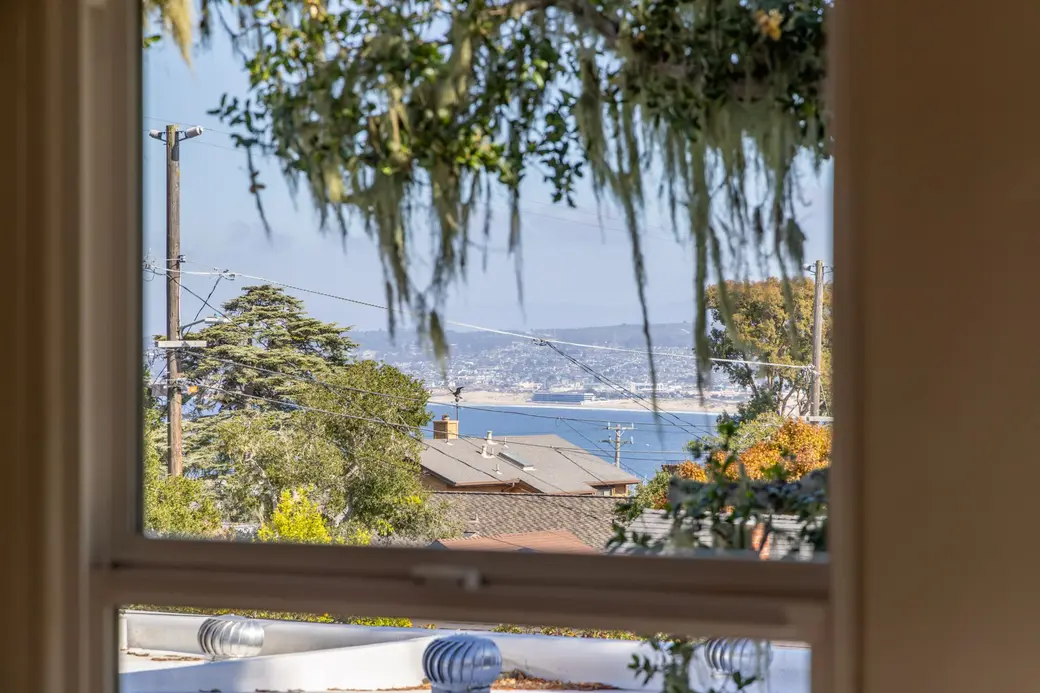
Monterey is the most internally varied community on the Monterey Peninsula. It is the only city on the Peninsula with a working waterfront, a major research institution, an active military presence, a historic downtown, and residential neighborhoods that range from Victorian-era blocks with bay views to quiet hilltop streets above the fog line. Buyers who say they are considering Monterey are often describing half a dozen different possible lives without knowing it.
This guide covers the neighborhoods that matter most for residential buyers — what each one offers, what it costs relative to the rest of the city, and what daily life actually feels like from within it.
Old Town and Downtown Monterey
The historic core of Monterey, centered around Alvarado Street and the blocks surrounding the Custom House and Fisherman's Wharf, is the city's most urban neighborhood. The streets here date to the Spanish and Mexican colonial periods, and the built environment reflects that history: adobes, Victorian commercial blocks, and the kind of mixed-use fabric that most California cities spent the postwar decades paving over.
Living in or immediately adjacent to downtown Monterey is the most walkable version of city life available on the Monterey Peninsula. Restaurants, the farmers market, the library, the transit center, and the waterfront path to Cannery Row are all within walking distance. The neighborhood has a social energy that the more residential parts of the city do not — more foot traffic, more street life, more of the texture that comes from a downtown that is genuinely used.
The residential options close to downtown tend toward smaller lots and older construction. Prices in this immediate area are generally lower than in the hilltop neighborhoods described below, reflecting both the proximity to commercial activity and the scale of the homes. For buyers who want urban walkability on the Peninsula and are not primarily motivated by views or privacy, downtown Monterey offers something genuinely distinct.
New Monterey and the Cannery Row Corridor
The neighborhood immediately above Cannery Row, running along the ridge between the waterfront and the residential streets of upper Monterey, is one of the city's most sought-after areas for buyers who want coastal proximity without the Carmel price point. The streets here — Prescott, David, and the surrounding blocks — offer views down to the bay and easy walking access to the coastal recreation path that runs from Lovers Point in Pacific Grove to Fisherman's Wharf.
The housing stock in New Monterey is a mix of craftsman bungalows, mid-century homes, and some more recent construction on lots that took advantage of the ridge-line views. The neighborhood has a genuine residential character — the kind of block where people know their neighbors — while remaining within a short walk of the restaurants and bars along Lighthouse Avenue that serve the local community rather than the tourist trade.
Buyers who discover New Monterey often describe it as the neighborhood they did not know they were looking for: more affordable than comparable coastal views in Pacific Grove or Carmel, walkable to both the waterfront and the commercial strip, and quieter than the more tourist-facing parts of the city.
Monterey is the most internally varied community on the Monterey Peninsula. Buyers who say they are considering Monterey are often describing half a dozen different possible lives without knowing it.
Skyline and Upper Monterey
The hilltop neighborhoods above downtown Monterey — the streets along Skyline Drive and the surrounding residential blocks — offer the most dramatic views in the city and the quietest residential experience. From these streets on a clear day, the arc of Monterey Bay is fully visible, from Santa Cruz in the north to the Point Lobos headlands in the south.
The housing stock in Skyline and upper Monterey is more varied than in New Monterey, ranging from modest mid-century homes to larger properties that take full advantage of the elevated position and the views it commands. Prices at the upper end of this neighborhood reflect the view premium, which in Monterey is real but still meaningfully below what comparable Bay views would cost in Carmel or Pacific Grove.
The trade-off for living at elevation in Monterey is the same as in most coastal California cities: the hilltop streets require a car for daily errands in a way that the flatter neighborhoods below do not. The fog line also affects these neighborhoods differently from those closer to the water — the hilltop streets often have clearer, warmer mornings during the summer months when the coast below is fogged in.
Casanova Oak Knoll
Casanova Oak Knoll is one of Monterey's most established residential neighborhoods, occupying the hillside above the historic adobes of Old Town and offering a combination of privacy, mature landscaping, and proximity to downtown that few other Monterey neighborhoods can match. The streets here wind through oak woodland, and the homes tend to sit on larger lots than those found closer to the water.
This is the neighborhood that draws buyers who want the Monterey lifestyle — access to downtown, proximity to the coastal path, good schools — without the more exposed character of the hilltop view streets or the denser fabric of the historic core. It is a genuinely established neighborhood in the sense that homes here are well-maintained, neighbors are long-term, and the community fabric is intact.
Prices in Casanova Oak Knoll sit in the middle range for Monterey — above the downtown core, below the premium view properties on Skyline, and competitive with what comparable privacy and lot size would cost in Pacific Grove. For buyers who prioritize a quieter, more established residential environment over coastal immediacy or dramatic views, this neighborhood consistently delivers.
Del Monte Beach
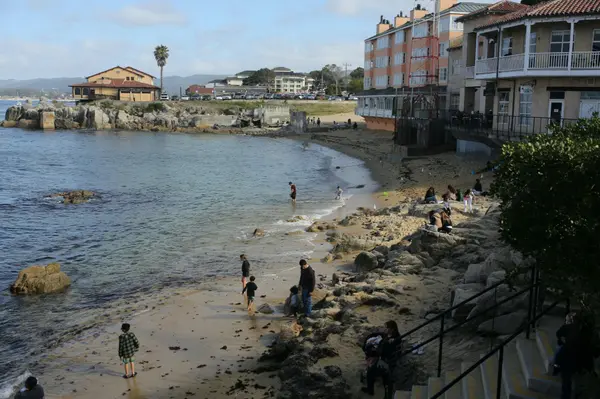
The Del Monte Beach neighborhood sits along the bay between downtown Monterey and the Seaside border, offering direct beach access and a residential character that is distinct from both the historic core and the hillside neighborhoods above. The streets here run close to the water, and the beach itself — a long sandy stretch that is less well-known than Carmel Beach and correspondingly less crowded — is the defining amenity.
The housing stock near Del Monte Beach includes a range of property types and ages, with prices that vary considerably based on proximity to the water and the condition of the individual property. The neighborhood has been appreciating steadily as buyers discover that direct bay access at Monterey prices represents significant value relative to comparable water proximity in the more expensive coastal communities.
The neighborhood is less walkable to the downtown core than New Monterey or the historic district, but the beach access and the quieter residential character make it a compelling choice for buyers whose primary daily routine centers on the water rather than on the city's commercial and cultural offerings.
Choosing the Right Part of Monterey
The right Monterey neighborhood depends on what the buyer actually wants from city living on the Peninsula. Urban walkability points to downtown and the historic core. Coastal views with neighborhood character points to New Monterey. Dramatic hilltop views and privacy point to Skyline. Established residential quiet points to Casanova Oak Knoll. Direct beach access points to Del Monte Beach.
What Monterey offers across all of these neighborhoods is something the more famous Peninsula communities do not: a genuine city, with the infrastructure, the diversity of housing, and the range of price points that a city implies. For buyers who have been looking exclusively at Carmel or Pacific Grove and finding that the fit is not quite right, Monterey is worth a serious look before the search is concluded. The Ruiz Group is happy to walk through what distinguishes each area for any buyer evaluating the city.
Related reading: Pacific Grove vs. Carmel vs. Monterey: Which Town Fits Your Life? · What Nobody Tells You Before Moving to the Monterey Peninsula · Carmel's Neighborhoods: A Street-Level Guide
Categories
Recent Posts

GET MORE INFORMATION
