
- /
The Silicon Valley to Carmel Wealth Corridor

Why High-Performance Professionals Choose the Monterey Peninsula
The drive from Silicon Valley to Carmel takes roughly two hours.
Psychologically, it’s much further.
The Peninsula represents a decompression point for founders, executives, and investors whose primary residences orbit Palo Alto, Atherton, Los Altos, and San Francisco.
Understanding this corridor explains a great deal about local real estate demand.
Liquidity Events and Lifestyle Reallocation
Many Monterey Peninsula buyers are not relocating permanently.
They are reallocating.
After IPOs, acquisitions, or long tenure in high-growth companies, capital often moves toward:
-
Hard assets with constrained supply
-
Coastal markets with long-term brand equity
-
Communities offering privacy without isolation
Carmel’s preservation policies contribute to a scarcity that mirrors the value logic these buyers already understand.
Proximity Without Saturation
Unlike Napa or Lake Tahoe, the Monterey Peninsula does not feel saturated with weekend traffic from the Bay Area.
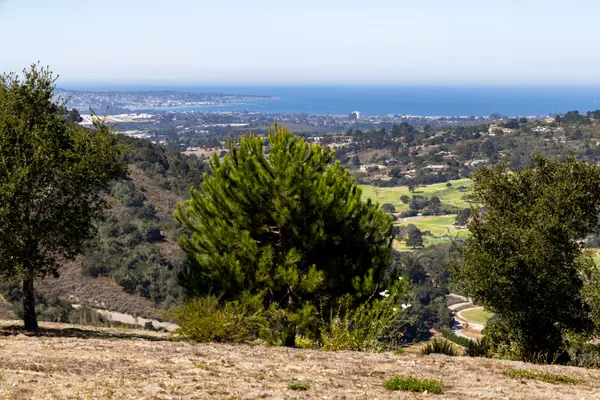
Properties near 17-Mile Drive or within walking distance of Carmel Beach offer immediate environmental contrast to tech campuses and urban density.
Ocean air replaces office air. Pine canopy replaces glass towers.
Privacy as a Priority
Many Silicon Valley buyers value discretion.
Pebble Beach, in particular, provides:
-
Gated entry points
-
Large forested parcels
-
Limited through-traffic
-
Architectural shielding
Carmel-by-the-Sea offers a different form of privacy: smaller-scale, walkable, culturally dense, but without overt display.
Both settings allow high-net-worth individuals to move quietly.
Remote Work and Hybrid Leadership
The normalization of remote leadership has accelerated interest in the Monterey Peninsula.
Executives who once required weekday proximity to headquarters now divide time differently.
Two hours from Silicon Valley becomes manageable when presence is strategic rather than daily.
Second homes increasingly function as:
-
Extended seasonal residences
-
Creative planning retreats
-
Family gathering anchors
The distinction between “primary” and “secondary” has blurred.
Generational Planning
A notable pattern among tech-sector buyers is that they structure purchases with longer time horizons.
Rather than flipping within short cycles, many acquire properties intended for:
-
Multi-decade holds
-
Intergenerational transfer
-
Estate planning strategies
Carmel’s architectural consistency and Pebble Beach’s development constraints support this approach.
In markets built on permanence, legacy thinking aligns naturally.
The Role of Strategic Representation
Buyers arriving from Silicon Valley are sophisticated.
They understand data, valuation models, and macro trends.
What they may not initially understand are:
-
Microclimate differences between Carmel and Pebble Beach
-
Coastal Commission timelines
-
Forest management rules
-
Neighborhood-by-neighborhood resale psychology
This is where advisory depth matters.
At The Ruiz Group, much of our work involves translating Monterey Peninsula nuance for clients accustomed to fast-moving urban markets.
The tempo here is just different.
Why the Corridor Persists
Several structural factors reinforce the Silicon Valley–Carmel pipeline:
-
Geographic proximity
-
Shared California coastal identity
-
Established wealth concentration to the north
-
Limited expansion capacity on the Peninsula
As long as innovation continues to generate liquidity in the Bay Area, a portion of that capital will seek physical expression in stable, scenic environments.
Carmel and Pebble Beach remain natural recipients.
A Matter of Contrast
Ultimately, this corridor exists because of contrast.
Silicon Valley optimizes for acceleration, while the Monterey Peninsula optimizes for preservation.
One builds. The other endures.
For high-performance professionals seeking balance, that equation is compelling.
Categories
Recent Posts





GET MORE INFORMATION
