
- /
The Economics of Second-Home Ownership on the Monterey Peninsula

The Monterey Peninsula has long attracted second-home buyers.
What is less discussed (at least publicly) is why the model tends to work here.
This is not a speculative market driven by short-term surges. It is a constrained, legacy coastal region shaped by preservation, limited land supply, and generational ownership patterns.
For those evaluating a second residence in Carmel or Pebble Beach, it's worth understanding the underlying economics.
1. Supply Constraints Are Structural, Not Cyclical
Unlike emerging coastal markets, the Peninsula faces permanent development limits:
-
Strict coastal oversight
-
Environmental protections
-
Mature neighborhoods with minimal vacant land
-
Architectural review processes
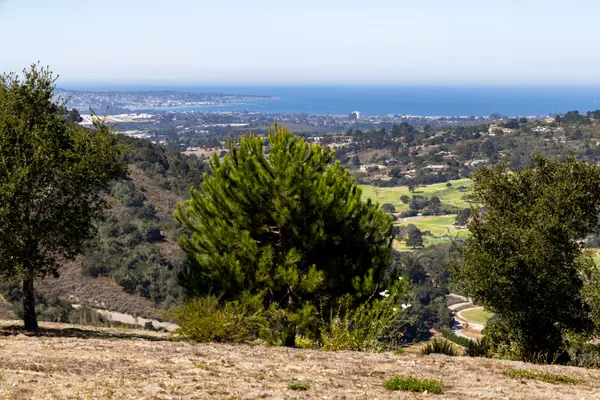
Communities near 17-Mile Drive or in Carmel-by-the-Sea are effectively built out.
Scarcity here is not marketing language. It is a factor of geography plus regulation.
That structural limitation tends to support long-term price resilience.
2. Buyer Profile Stability
Second-home ownership on the Peninsula typically skews toward:
-
Established wealth
-
Tech and finance executives
-
Retirees with diversified portfolios
-
Multi-generational family buyers
This buyer base is less leverage-dependent than in resort-heavy markets.
During broader market volatility, discretionary purchasing may slow, but forced selling remains relatively limited compared to high-leverage vacation destinations.
That distinction reduces dramatic pricing swings.
3. Usage Patterns: Personal First, Income Second
Unlike some resort towns built around short-term rental yield, Carmel and Pebble Beach function primarily as lifestyle properties.
Many second homes are:
-
Used seasonally
-
Held for long-term appreciation
-
Passed between generations
Short-term rental regulations in Carmel-by-the-Sea are restrictive, which naturally shifts the economic model toward ownership enjoyment rather than aggressive income optimization.
For investors expecting strong nightly rental arbitrage, this is not Scottsdale or Miami.
For buyers seeking stability and personal utility, that’s precisely the appeal.
4. Carrying Costs and Considerations
Second-home ownership here involves:
-
Property taxes (California’s Prop 13 structure creates long-term tax predictability once acquired)
-
Insurance, particularly in coastal and wildfire zones
-
Ongoing maintenance due to marine air exposure
-
HOA or community fees in certain Pebble Beach enclaves
Oceanfront homes near Carmel Beach may experience higher maintenance due to salt and wind exposure.
Forested properties in Pebble Beach may carry vegetation management requirements.
These are not deterrents, but they are real line items in long-term planning.
5. Appreciation Drivers
Long-term value on the Peninsula tends to be supported by:
-
Global brand recognition of Pebble Beach Golf Links
-
Cultural prestige rooted in Carmel’s artistic history
-
Proximity to Silicon Valley wealth centers
-
Permanent environmental constraints on expansion
Unlike fast-growth metros driven by population influx, appreciation here is often incremental and reputation-based.
It is less explosive, and more durable.
6. Liquidity Realities
Second homes are, by definition, discretionary assets.
Liquidity in Carmel and Pebble Beach remains relatively strong in prime price tiers, but marketing timelines can vary depending on:
-
Season
-
View orientation
-
Architectural quality
-
Micro-location
Iconic properties trade differently than interior lots.
Buyers should approach ownership with medium- to long-term horizons rather than short resale expectations.
7. Emotional ROI
An overlooked metric: experiential return.
Owners often describe value in terms of:
-
Family gathering continuity
-
Holiday tradition building
-
Psychological distance from primary urban residence
-
Creative or intellectual restoration
These intangible returns frequently outweigh rental yield calculations, which is why many owners hold for decades.
8. Comparing to Other Coastal Markets
The Monterey Peninsula differs from:
-
High-density Florida resort markets
-
Rapidly expanding Texas vacation hubs
-
Short-term rental-driven mountain towns
Its growth is not built on expansion, but by its opposite: on limitation.
For certain investors, that feels restrictive.
For long-term wealth preservation buyers, it feels protective and absolutley right.
Strategic Questions for Prospective Buyers
Before purchasing a second home here, consider:
-
Is this primarily lifestyle-driven or financially optimized?
-
Am I prepared for seasonal underutilization?
-
How important is architectural uniqueness in long-term resale?
-
Does my holding horizon align with a slower, steadier appreciation model?
Clarity here prevents misaligned expectations.
The Broader Perspective
Second-home ownership on the Monterey Peninsula functions less like a trade and more like an allocation.
An allocation toward:
-
Scarcity
-
Cultural capital
-
Environmental beauty
-
Long-term stability
For the right buyer profile, that allocation makes sense.
Not because it promises outsized short-term returns, but because it sits easily (and beautifully) within a diversified life.
Categories
Recent Posts




GET MORE INFORMATION
