
- /
Why Two Owners Can Have Similar Properties but Completely Different Tax Outcomes

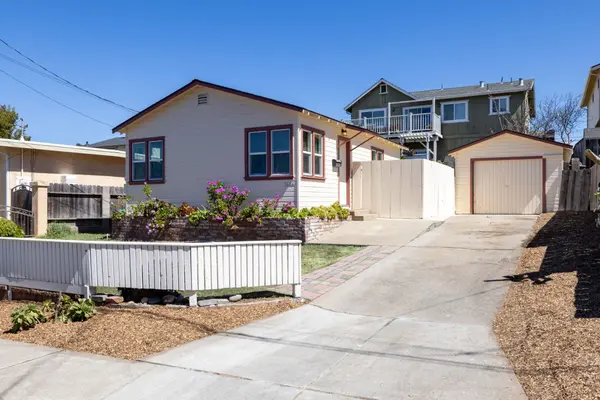
From the street, the houses look identical.
Same square footage. Same lot size. Same neighborhood. They sell within weeks of each other for nearly the same price. To most observers, these are interchangeable transactions. To the tax system, they are not even close.
Ownership is a timeline
When the IRS evaluates a sale, it is not asking what the property is worth. It is asking how the owner came to hold it, how long they held it, how they used it, and what changed along the way.
Two owners can arrive at the same sale price through entirely different paths.
One may have purchased recently at a high basis and lived in the home full time. Another may have bought decades earlier, rented it for years, remodeled in phases, transferred partial interests, or inherited it under older rules. The market value at exit may converge. The tax calculation rarely does.
This is why comparisons between neighbors often feel unfair. They are comparing outcomes without comparing timelines.
The importance of purchase date
In California, long holding periods amplify differences.
A homeowner who purchased in the early 1990s and sells today is not just realizing appreciation. They are realizing decades of accumulated gap between purchase price and market value. Even generous exclusions do not always neutralize that distance.
By contrast, a homeowner who purchased recently may see minimal taxable gain, even if the sale price is similar.
Use changes the math
How a property is used matters as much as how long it is held.
A home that was rented for several years and later converted back to a primary residence carries that rental history forward. Depreciation reduces basis, even if the owner did not feel meaningfully enriched by it at the time. When the property sells, that reduction is still there.
Meanwhile, a neighbor who lived in their home continuously may qualify for exclusions that dramatically reduce taxable gain.
Both homes can look identical at sale. Their tax histories are not.
Improvements do not land evenly
Improvements add another layer of divergence.
One owner may have completed a large, well documented remodel that increased basis materially. Another may have improved gradually, replaced systems as needed, or focused on maintenance that does not qualify as a capital improvement.
The houses can end up in similar condition. The tax treatment does not converge just because the outcomes do.
This is one of the reasons documentation matters more than people expect. Basis is not inferred from appearance. It is supported by records.
Transfers introduce asymmetry
Ownership changes that happen off market often create the biggest differences.
Inherited property can receive a reset basis, depending on when and how the transfer occurred. Family transfers may preserve the original basis or partially reset it. Post Prop 19 transfers follow different rules entirely.
Two siblings can inherit interests in the same property under different conditions and carry different bases. Two neighbors can own identical homes, one purchased, one inherited, and face very different consequences at sale.
From the outside, these distinctions are invisible. The tax system sees them clearly.
The illusion of sameness
What makes these differences feel jarring is that real estate is marketed visually. Square footage, finishes, views, and location dominate how value is discussed. Taxes, by contrast, are historical.
They care less about what a property looks like and more about what it has been through.
When homeowners ask why their tax bill does not resemble their neighbor’s, the answer is usually not hidden or arbitrary. It is cumulative.
Why this matters earlier than people expect
Most people only confront these differences when a sale is already underway. At that point, the story is mostly written. The math is simply being revealed.
Understanding that identical properties do not produce identical tax outcomes changes how people think about ownership long before a sale. It reframes decisions about use, transfers, and improvements as chapters in a longer record, not isolated moments.
This is not about trying to control every variable. It is about recognizing that the system remembers what the market forgets.
In the next chapter, we will look at one of the most common ways these histories diverge in California, what happens to taxes when property moves between parents and children, and why the rules governing those transfers reshaped outcomes almost overnight.
Categories
Recent Posts









GET MORE INFORMATION
