
- /
What Makes a Good Investment Property on the Monterey Peninsula?
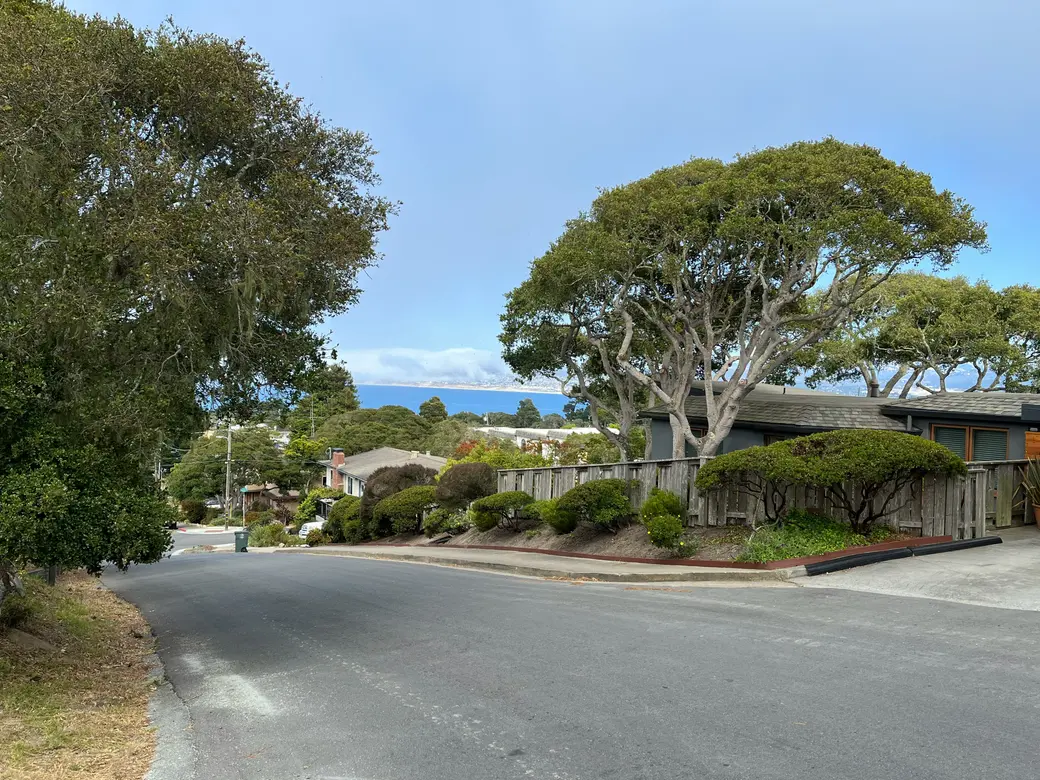
The Monterey Peninsula is not a high-yield market. Cap rates at most price points are modest, and carrying costs here are substantial. But what this market does offer investors is a structural story that holds up under scrutiny: a meaningful supply constraint working in conjunction with a durable, cycle-resilient demand base. That combination is rare. Let’s take a deeper look.
The Supply Side: Why New Inventory Cannot Close the Gap
In most real estate markets, rising prices attract new supply. Developers build more units, inventory increases, and price appreciation moderates. The Monterey Peninsula's supply response is structurally limited in ways that distinguish it from most markets.
The California Coastal Commission regulates development along the coast and has historically taken a restrictive posture toward new construction in sensitive coastal zones. Monterey County's general plan limits density in unincorporated areas. The existing built environment in Carmel-by-the-Sea, Pacific Grove, and Pebble Beach is largely fixed by design. These communities have resisted the kind of infill development that has changed the character of other California coastal towns. The geography itself is also a constraint: the Monterey Peninsula is surrounded by water on three sides and agricultural land on the fourth.
The investment implication is specific. In a supply-constrained market, the price floor is more durable than in a market where developers can respond to demand. When demand softens, oversupply does not compound the problem. When demand strengthens, inventory cannot expand fast enough to absorb it. This does not guarantee appreciation. But it meaningfully changes the risk profile of holding real property here over time, in a direction that is generally favorable to the long-term investor.
The Demand Side: Who Buys and Rents Here, and Why It Matters
The demand case for the Monterey Peninsula is rooted in a specific demographic reality. The market draws buyers and tenants primarily from the Bay Area, one of the highest-income metropolitan concentrations in the world. These are not discretionary purchasers operating at the edge of their financial capacity. They are executives, founders, physicians, and senior professionals whose ability to hold, buy, or rent premium property is not primarily a function of prevailing mortgage rates or short-term income disruption.
No market is immune to cycles. But what we observe is that price corrections here tend to be shallower than in most other California markets, and recoveries happen faster.
The Monterey Peninsula simply offers something that genuinely cannot be found elsewhere.
What The Ruiz Group Looks for in a Specific Property
Configuration and income potential: Property configuration is the most significant variable in rental income. A home with a permitted ADU, guest cottage, or secondary unit produces meaningfully stronger yields than a comparable single-family home without secondary income. The Ruiz Group evaluates whether the existing configuration is optimized for income, and when it is not, whether there is a realistic and financially sound path to adding income-producing square footage through the permitting process.
Condition relative to the target demographic: The Monterey Peninsula's tenant and buyer pool has specific expectations. A property in excellent condition commands premium rents and sells to premium buyers. A property requiring significant capital investment before it can attract that demographic is a value-add play, which carries a different risk profile and requires a different kind of underwriting. The Ruiz Group distinguishes between addressable deferred maintenance and structural issues that the yield cannot support.
Submarket dynamics: Different submarkets produce different investment profiles. Some areas offer stronger income potential, while others offer stronger appreciation but thinner yields. The Ruiz Group evaluates submarket nuances in each investment analysis it conducts.
The carrying cost burden relative to income: Insurance, HOA fees, property management, and maintenance can collectively run $60,000 to $80,000 per year on a mid-market property before debt service. A property with high HOA fees, wildfire insurance exposure, or significant ongoing maintenance requirements may not produce sufficient net income to justify its investment profile, even if the gross yield looks acceptable. The Ruiz Group nets out carrying costs in every investment evaluation before presenting a return projection.
What Does Not Make a Good Investment Here
The supply constraint and demand quality arguments are sincere. But they do not apply equally to every property in the market.
Properties with high HOA fees that consume a meaningful share of rental income are poor yield investments regardless of their location. Properties in jurisdictions where STRs are banned or effectively capped are limited to long-term rental income, which at Carmel and Pebble Beach price points often produces cap rates of 1.5 percent or lower. Properties requiring extensive rehabilitation before they can attract the premium tenant demographic require capital that the stabilized yield may not support. And properties at the upper end of the market, where the purchase price is high relative to the rental income the property can generate, are best evaluated as appreciation plays rather than income plays — which changes the holding period, the financing structure, and the exit strategy.
None of these are reasons to avoid the market. They are reasons to understand exactly what you are buying before you buy it.
The Property-Level Analysis
If you are evaluating a specific Monterey Peninsula property as an investment, or actively looking to acquire one, The Ruiz Group can underwrite the specific parcel. That includes the submarket supply and demand analysis, the income potential given the property's configuration and use rights, the condition assessment relative to the target demographic, and the carrying cost model that determines what the investment actually nets.
That analysis is available as part of The Ruiz Group's standard investor consultation process, at no charge.
Related reading: Can You Actually Make Money Renting a Home on the Monterey Peninsula? · How Short-Term Rental Rules Vary Across the Monterey Peninsula · The Real Cost of Owning a Second Home on the Monterey Peninsula · Preservation, Scarcity, and Long-Term Value on the Monterey Peninsula
Categories
Recent Posts










GET MORE INFORMATION
