
- /
Monterey County Permitting, Part 5: New Construction

Buying Vacant Land and Building From Scratch: What You Need to Understand Before You Fall in Love
There is a particular kind of allure to vacant land. No compromises inherited from someone else’s decisions. No awkward additions to undo. No 1970s floor plan asking to be reconceived. Just land, possibility, and the promise of doing it right from the beginning.
On the Monterey Peninsula, that promise is real. But it is also conditional.
Building a brand new home on vacant land is not simply a cleaner version of renovating an older one. It is a fundamentally different undertaking, governed less by finishes and aesthetics and more by invisible systems, jurisdictional boundaries, and physical realities that cannot be negotiated away with taste or money alone.
This post is not meant to discourage you. It is meant to orient you. The buyers who have the best experience building from scratch are not the ones with the biggest budgets or the most ambitious designs. They are the ones who understand what the land is asking of them before they commit to owning it.
Start with the question most people ask last: Is water actually available?
If there is one thing that determines whether a vacant lot is buildable, it is water. Not the presence of a pipe in the street. Not a seller’s assurance. Not even what a neighboring home appears to have. Actual, provable water availability.
Depending on location, water service may come from California American Water, a private well, or a more complex hybrid arrangement. Each comes with its own requirements, limitations, and documentation standards.
In many cases, a buyer needs written confirmation that a property can receive water service before a building permit can be issued. This is not a formality. It is a gating item. Without it, everything else is theoretical.
Water credits, allocation rules, and moratorium histories matter here. So does the difference between replacing an existing structure and building something entirely new. Vacant land does not benefit from grandfathered assumptions. It starts at zero.
This is where we often see otherwise strong projects stall, sometimes indefinitely. Buyers fall in love with the idea of what they could build, only to discover that the land cannot currently support a new connection, or that securing one will require time, expense, and uncertainty far beyond what they anticipated.
Before you think about square footage or views, you need clarity on water. Not vibes. Not hope. Documentation.
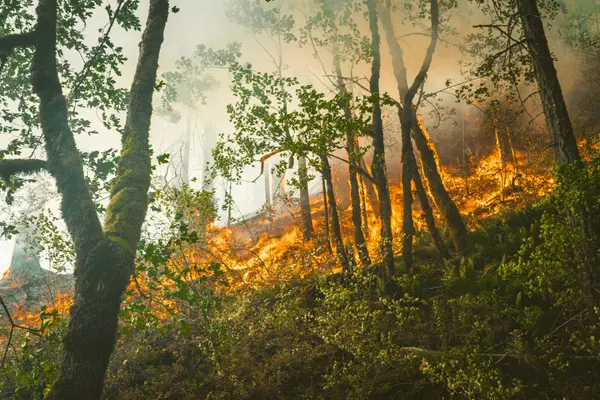
Fire Jurisdiction is a design constraint.
Many buyers first encounter fire regulations late in the process, often when a plan reviewer flags access issues or vegetation management requirements that feel disconnected from the home they imagined.
In reality, fire jurisdiction shapes a project from the ground up.
Fire authorities evaluate whether emergency vehicles can reach the site, turn around safely, and access the structure once built. This affects driveway width, slope, surfacing, turnarounds, and sometimes even where on the lot a home can be placed. In some cases, a secondary access route is required. In others, extensive fuel management becomes a permanent condition of ownership.
None of this is optional. And none of it is resolved with architectural creativity alone.
A beautiful design that cannot meet fire access standards will not move forward. Understanding the fire authority involved, and how they interpret their mandate, is essential early on. This is especially true in areas with narrow roads, significant vegetation, or hillside terrain, which describes more of the Peninsula than many buyers initially realize.
The land has a memory, and geology tells it
Vacant land often looks quiet. Stable. Patient. But the ground beneath it has a history, and that history matters.
Geotechnical reports exist for a reason. Soil composition, slope stability, and evidence of prior movement all inform what can safely be built, and how. In some areas, landslide history or expansive soils require specialized foundations or limit buildable areas altogether.
A geotechnical report is the land telling you how it behaves under stress, over time, and in response to water. Ignoring that conversation does not make it go away. It just delays the moment when the project becomes more complex and more expensive.
Buyers who respect this process early tend to make better decisions about lot selection, design scope, and long-term risk.
Height limits, story poles, and the politics of visibility
Height limits are easy to misunderstand. They are rarely just about numbers. They are about sightlines, neighbors, and the collective experience of place.
On many parts of the Peninsula, proposed height is evaluated not only in isolation but in relationship to surrounding properties and public viewpoints. Story poles are used to visualize massing and impact. These exercises are taken seriously, and they invite scrutiny.
What you can build on paper and what is approved in practice are sometimes different things.
This is where sensitivity matters. Not just to regulations, but to context. Projects that acknowledge view corridors, scale, and neighborhood character tend to move more smoothly than those that test limits simply because they exist.
Understanding this dynamic before you design can save time, money, and frustration. It can also lead to better architecture.
Design review is about culture, not just compliance
Architectural review boards and design committees are often framed as obstacles. In reality, they are cultural stewards.
Each jurisdiction has its own priorities, whether that is historical continuity, environmental integration, or a particular aesthetic sensibility. These values are not always written in code, but they are very real in practice.
Projects that engage with this culture thoughtfully tend to find allies. Projects that treat review as a box to check often find resistance.
This does not mean abandoning your vision. It means understanding the language in which it needs to be expressed. Architects who know how to navigate these conversations are invaluable. So is having an advocate who understands how decisions are actually made, not just how applications are submitted.
Infrastructure is rarely as simple as it looks
Vacant land can be deceptive. The absence of visible constraints can create the impression that infrastructure is straightforward. It often is not.
Utility connections may require trenching across neighboring parcels or public rights of way. Sewer availability may differ block by block. Septic systems come with their own siting and testing requirements. Roads may need improvement or dedication before permits are issued.
These are not deal-breakers. But they are variables. And they should be understood as part of the land’s true cost.
Coastal oversight is situational, not universal
The Coastal Commission is often invoked as a catch-all concern, but its jurisdiction is specific. Not every vacant lot is subject to the same level of review, and not every project triggers the same oversight.
That said, when coastal review applies, it adds layers of process and potential appeal that should be respected.
Knowing whether a property falls within the coastal zone, and what that actually means for a new build, is essential before timelines or expectations are set.
The advantage of seeing the whole picture
The buyers who navigate new construction most successfully are not the ones who rush. They are the ones who understand the order of operations, the non-negotiables, and the places where flexibility still exists.
Vacant land is not a blank slate. It is a conversation. With the environment, with regulators, with infrastructure, and with history.
When you listen early, you make better choices later.
Categories
Recent Posts






GET MORE INFORMATION
