
- /
Carmel’s Literary DNA
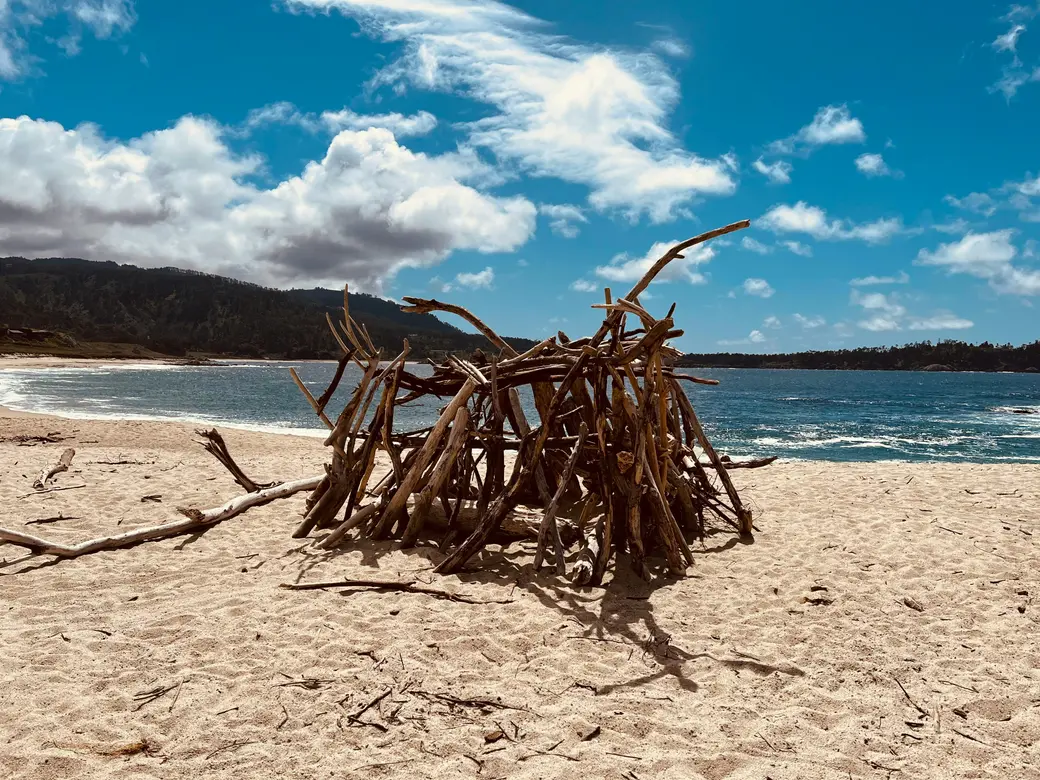
The Writers Who Turned a Coastal Village Into a Cultural Landmark
Long before Carmel became a luxury coastal destination, it was known for something else entirely.
Writers.
In the early twentieth century, poets, journalists, playwrights, and novelists began arriving on the Monterey Peninsula looking for something increasingly difficult to find in American cities: quiet.
Carmel offered distance from literary centers like New York and San Francisco. It offered dramatic landscapes, modest living costs (if you can believe that), and a community that welcomed creative work.
Over time, the village became one of the most influential writer colonies on the West Coast.
Robinson Jeffers and the Poetry of the Coast
No writer is more closely associated with Carmel than Robinson Jeffers.
In 1919, Jeffers and his wife Una built a stone house overlooking the Pacific, now known as Tor House.
From this rugged perch he wrote poems that captured the stark beauty and violence of the California coastline. His work rejected human-centered thinking and instead emphasized the scale and indifference of nature.
The cliffs, the ocean, and the cypress trees, were the protagonists in Jeffers’ work.
His presence alone might have secured Carmel a place in American literary history.
But he was far from the only writer here.
Jack London and the Early Literary Migration
One of the earliest prominent writers connected to the Peninsula was Jack London.
London traveled extensively along the California coast and spent time on the Monterey Peninsula during the early twentieth century. His presence helped introduce the area to a broader literary audience.
For writers seeking distance from urban publishing centers, Carmel offered both inspiration and anonymity.
Sinclair Lewis Writes His First Novel Here
Sinclair Lewis arrived in Carmel in the early 1910s.
While living here, Lewis completed Our Mr. Wrenn, his first published novel. At the time, he was still far from the fame he would later achieve with books like Main Street and Babbitt.
Years later, Lewis became the first American to win the Nobel Prize in Literature.
Part of that journey began in Carmel.
Upton Sinclair and Political Literature
Sinclair was one of the most influential political writers of his era. His novel The Jungle exposed labor conditions in Chicago’s meatpacking industry and helped spark national reforms.
Carmel’s creative environment appealed to writers whose work intersected with journalism, politics, and social commentary.
Mary Austin and the Western Landscape
Another important literary figure connected to Carmel was Mary Austin.
Austin was known for her writing about the landscapes and cultures of the American West, particularly the desert regions of California and Nevada.
Her work explored how environment shapes human experience, a theme that resonated strongly with the coastal drama of the Monterey Peninsula.
A Community of Writers
What made Carmel unique was not simply that famous writers passed through.
It was that they formed a community.
In the early twentieth century, Carmel hosted:
-
literary salons
-
amateur theater productions
-
small magazines and newspapers
-
informal reading groups
Writers lived next door to painters, actors, and photographers. The creative disciplines overlapped constantly.
Why Carmel Attracted Writers
Several factors made Carmel unusually attractive to literary figures:
• Isolation from large cities
• Low cost of living in the early 1900s
• Extraordinary landscape
• A tolerant, artistic community
In other words, the village functioned almost like an early creative retreat.
People came to work, and many stayed.
The Legacy You Can Still Feel
Even today, Carmel carries traces of that literary heritage.
The village still supports:
-
independent bookstores
-
art galleries
-
cultural institutions like Sunset Cultural Center
-
historic landmarks like Tor House
More subtly, the town still values creativity and individual expression.
Architecture varies widely. Homes are highly personal, never bland or formulaic. The community retains a certain independence that traces back to its early artistic residents.
Why This History Matters to Buyers
Many people initially come to Carmel because of the coastline.
But over time, the deeper cultural layers become just as compelling.
Unlike places developed primarily as resorts, Carmel evolved organically from a community of artists and writers.
That legacy continues to shape the town’s character, its architecture, and its commitment to preserving a human-scale village.
A Place That Still Inspires
Walk through Carmel on a quiet morning and it is easy to understand why writers stayed.
The landscape remains dramatic.
The pace remains contemplative.
The village remains intimate.
More than a century after the first writers arrived, Carmel still offers something that creative people continue to seek.
Space to think.
Categories
Recent Posts







GET MORE INFORMATION
