
- /
Fire Insurance on the Monterey Peninsula: What Buyers and Owners Need to Know Right Now
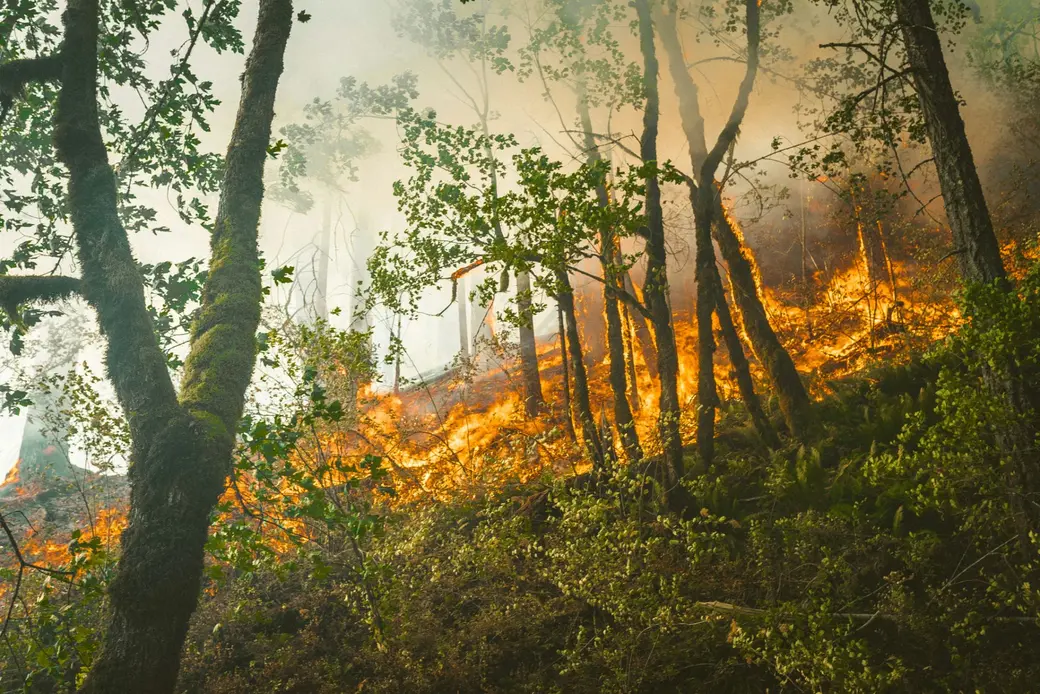
California's homeowners insurance market is in a crisis that is no longer limited to the most fire-prone rural communities. Average premiums across the state rose 84 percent between the end of 2020 and early 2026. FAIR Plan enrollment — the state's insurer of last resort — has nearly tripled. Seven of California's twelve largest home insurers have reduced or halted new underwriting in the state. And the 2025 Los Angeles wildfires pushed the system further under strain, with the FAIR Plan now seeking a rate increase of approximately 36 percent.
On the Monterey Peninsula, the insurance picture is complicated by terrain and jurisdiction in ways that buyers and current owners frequently discover later than they should. The forested areas of Pebble Beach, the coastal bluffs of Carmel Highlands, the oak-wooded hillsides of Carmel Valley, and the wildland-urban interface zones throughout the broader Peninsula area have been reclassified in CAL FIRE's updated Fire Hazard Severity Zone maps released in March 2025. The practical consequences of those reclassifications — for insurance availability, premiums, and the ability to finance a purchase — are worth understanding before making an offer.
Why Insurers Are Pulling Back — and What It Means Here
The retreat of private insurers from California's high-risk markets has been underway for several years, accelerating after the 2017 and 2018 wildfire seasons and again after the 2025 Los Angeles fires. The mechanism is straightforward: insurers that paid billions in claims in consecutive years concluded that California's Proposition 103 — which limits how quickly they can raise rates and requires lengthy regulatory approval for increases above 7 percent — made the California market unprofitable to continue writing at scale. State Farm, Allstate, Farmers, and other major carriers have all restricted new policies or exited specific California markets in recent years.
The result for Monterey Peninsula buyers is a market that has bifurcated. Properties in lower-risk zones — much of Monterey city, Seaside, Marina, and the flatter coastal areas of Pacific Grove — can generally still be insured through admitted carriers at elevated but manageable premiums. Properties in higher-risk zones — Del Monte Forest in Pebble Beach, the wooded hillsides of Carmel Highlands, rural Carmel Valley, and the interface areas around the former Fort Ord — face a market where admitted carriers have significantly reduced availability, non-renewal notices are common for existing policies, and the path to coverage often leads to the FAIR Plan or to surplus lines carriers at significantly higher cost.
The updated CAL FIRE Fire Hazard Severity Zone maps released in March 2025 added further complexity by reclassifying portions of Monterey County that were previously categorized at lower risk levels. Properties that were in the Moderate or High hazard category are now in some cases reclassified to Very High, which affects insurer appetite, lender requirements, and the overall carrying cost calculation for ownership.
The FAIR Plan: What It Is and When It Becomes the Only Option
The California FAIR Plan — Fair Access to Insurance Requirements — was established in 1968 as an insurer of last resort for properties that cannot obtain coverage through the admitted market. It was designed as a temporary safety net. It has become, for a growing number of California homeowners, the permanent solution.
The FAIR Plan provides basic fire coverage — fire, smoke, lightning, and internal explosion — but not the comprehensive homeowners coverage that an admitted carrier policy provides. It does not include liability protection, theft coverage, or many of the additional protections that a standard homeowners policy carries. Owners on the FAIR Plan typically need to purchase a separate Difference in Conditions policy to fill the gaps that FAIR does not cover, which adds further cost to an already expensive situation.
The FAIR Plan's total exposure has grown from $160 billion in 2021 to more than $558 billion as of 2025 — a reflection of how many California homeowners have moved onto it as private options disappeared. The plan is now seeking a rate increase of approximately 36 percent, having already raised rates significantly in recent years. For buyers who are being told that the FAIR Plan is the only option for a property they are considering, the full cost of coverage — FAIR Plan premium plus Difference in Conditions policy — should be modeled explicitly as part of the carrying cost calculation before an offer is made.
FAIR Plan rates, coverage terms, and availability are subject to change. Verify current terms directly with the FAIR Plan or a licensed insurance broker before making any purchase decision based on FAIR Plan coverage.
Insurance availability is now a material due diligence item on any Monterey Peninsula purchase in a forested or wildland-interface area. Discovering that coverage is unavailable or unaffordable after the inspection contingency is released is a problem that was preventable.
The Peninsula Areas Most Affected
Pebble Beach and Del Monte Forest: The Del Monte Forest's dense Monterey pine and cypress cover places Pebble Beach in a high fire risk category that has intensified the insurance challenge for homeowners here. Properties in the forest are among those where admitted carrier availability has declined most significantly in recent years. Buyers should obtain an insurance quote — not an estimate, an actual quote from a carrier willing to bind — before removing contingencies on any Pebble Beach purchase.
Carmel Highlands: The coastal bluff and hillside properties of Carmel Highlands, with their cypress woodland and proximity to undeveloped coastal land, present an insurance profile that many admitted carriers have become unwilling to write. The 2025 CAL FIRE map updates and the area's classification under the county's Local Coastal Program create additional complexity. Insurance availability and cost should be confirmed specifically for any Carmel Highlands property before purchase.
Carmel Valley: The further inland a Carmel Valley property sits, the more complex its fire risk and insurance profile tends to become. Properties in the upper valley, with oak woodland and chaparral, sit in zones where private carrier availability has diminished substantially and where FAIR Plan reliance is common. The village area and properties closer to Highway 1 generally have better insurance access than the rural upper valley, but conditions vary significantly by parcel.
Areas near the former Fort Ord: The restored habitat and native vegetation on the former Fort Ord lands adjacent to Seaside and Marina create wildland-urban interface conditions that affect some properties in those communities. The risk profile is generally lower than in the heavily forested Peninsula communities, but the interface zones warrant specific insurance investigation rather than assumption.
What Buyers Should Do Before Making an Offer
Insurance availability and cost is a material consideration in any Monterey Peninsula purchase in a forested, hillside, or wildland-interface area. The sequence that produces the best outcomes:
Obtain an insurance quote before removing contingencies: An insurance quote — not a general estimate, but an actual quote from a carrier willing to bind on the specific property — should be in hand before the inspection contingency is released. A property that cannot be insured through the admitted market, or that can only be insured through the FAIR Plan at a cost that materially changes the carrying cost calculation, is a different asset from what the listing price implies. Discovering this after contingencies are released is a problem that was preventable with earlier action.
Check the CAL FIRE Fire Hazard Severity Zone designation: The March 2025 CAL FIRE map update reclassified portions of Monterey County. The designation for any specific parcel is publicly searchable through CAL FIRE's online mapping tools. A Very High designation affects insurer appetite, lender requirements for escrow reserves, and the overall carrying cost of ownership. Knowing the designation before making an offer is basic due diligence.
Work with an insurance broker who knows this market: A general insurance agent may not have relationships with the surplus lines carriers and specialty programs that cover high-risk Monterey Peninsula properties. A broker who works regularly in this market will know which carriers are currently writing policies on properties with similar risk profiles, what the realistic premium range looks like, and whether the FAIR Plan is likely to be the only option. That knowledge is worth the time it takes to find the right broker before an offer is made.
Model the full carrying cost with realistic insurance: A Pebble Beach property that requires a FAIR Plan policy plus a Difference in Conditions policy may carry an annual insurance cost that is two to three times what a comparable property in Pacific Grove would cost to insure. That difference is part of the true carrying cost of ownership and should appear in any financial model used to evaluate the purchase.
For Existing Owners: What to Do If You've Received a Non-Renewal Notice
Non-renewal notices have become increasingly common for homeowners in higher-risk Peninsula areas. Receiving one does not mean coverage is unavailable — it means the current carrier has declined to continue the policy, and the owner needs to find an alternative before the expiration date.
The first step is contacting an independent broker who works with surplus lines carriers and specialty programs. These carriers are not admitted in California but are licensed to write coverage in the state, and many of them have continued to write Peninsula properties that admitted carriers have exited. The premiums are higher, the coverage terms may differ from what the previous policy provided, and the process requires more documentation of the property's condition and mitigation measures, but coverage is typically available.
Mitigation matters. Carriers writing high-risk properties increasingly require documentation of defensible space — vegetation clearance around the structure, ember-resistant vents and roofing materials, and other physical features that reduce ignition risk. Properties that have completed documented mitigation work are more likely to obtain coverage and may qualify for better rates than those that have not. The California Department of Insurance's website includes resources on the specific mitigation measures that qualify for consideration.
A Conversation Worth Having Early
The Ruiz Group addresses insurance availability as part of the pre-offer conversation on any Peninsula property in a higher-risk area. We can connect buyers with brokers who know this market and who can provide a realistic insurance picture before an offer is submitted — not as an afterthought during escrow. If you are evaluating a Monterey Peninsula property and want to understand the insurance landscape for that specific parcel before you make an offer, that conversation is available.
Related reading: What the Coastal Commission Reviews (and What Triggers It) · The Real Cost of Owning a Second Home on the Monterey Peninsula · What Your Net Sheet Actually Tells You
Categories
Recent Posts








GET MORE INFORMATION
