
- /
Swimming on the Monterey Peninsula
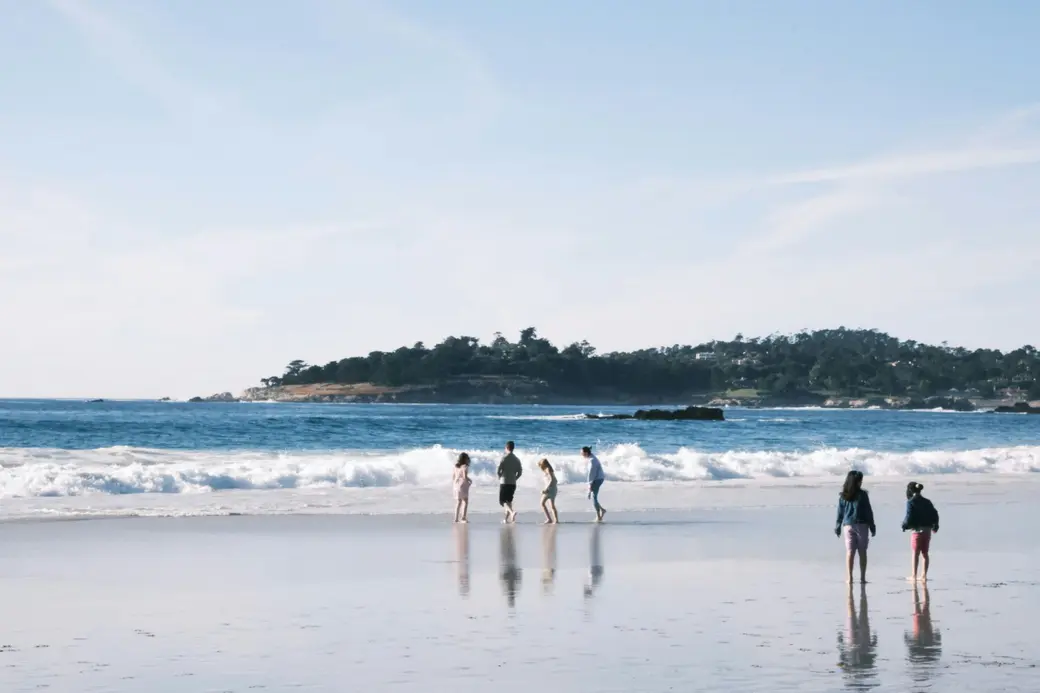
It's Not What Most People Expect
There’s a certain image people carry with them when they think about coastal living in California.
It usually includes the ocean.
And somewhere in that image, whether consciously or not, is the idea of swimming.
Not aggressively. Not athletically.
Just… the option of it.
The ability to walk down to the water, step in, and stay for a while.
On the Monterey Peninsula, that expectation doesn’t quite hold.
The Ocean Is Colder Than You Think
Even if you already “know” the Pacific is cold, it tends to be an abstract understanding.
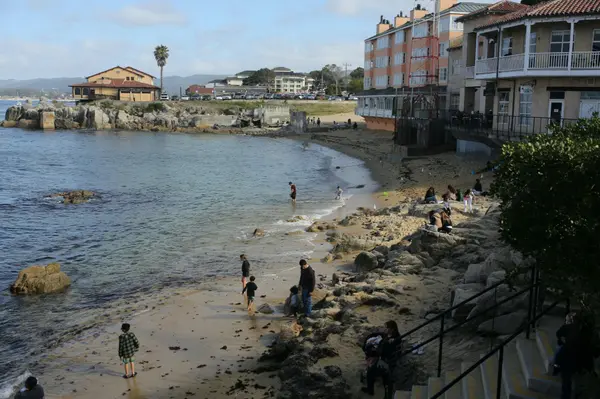
Until you’re standing at the edge of Carmel Beach or looking out from Point Lobos State Natural Reserve, it’s easy to assume that on the right day, it might feel manageable.
Most of the time, it doesn’t.
The water here is consistently cold enough that swimming, in the casual sense most people imagine, isn’t particularly comfortable or sustainable without preparation.
This isn’t Southern California.
It’s a different relationship to the ocean entirely.
It’s Not Just Temperature, It’s Conditions
Even on a warmer day, the experience of getting into the water is shaped by more than just how it feels.
There’s:
• surf that can be unpredictable
• steep beach grades that change entry and exit
• currents that are stronger than they appear
• a lack of protected, gentle zones for casual swimming
The coastline is open, exposed, and dynamic.
Beautiful, but not especially forgiving.
The People Who Swim Here Really Swim
There is a small group of people who are in the water regularly.
But they are not easing into it.
They are prepared for it and approach it with a high degree of intentionality (a wetsuit is also helpful).
Swimming here tends to be:
• purposeful
• time-limited
• more athletic than recreational
It’s less about drifting and more about engagement.
Where Swimming Actually Happens
If you spend enough time here, you’ll notice people who want to swim regularly often don’t rely on the ocean.
They find alternatives.
That might mean:
• pools, either private or part of a club setting
• more protected bodies of water further inland
• structured environments where conditions are controlled
Places in and around Carmel Valley, for example, offer a very different relationship to water than the coast itself.
Warmer. Calmer. More predictable.
The Gap Between Image and Reality
This is one of those subtle mismatches that doesn’t show up in photos.
The coastline suggests one kind of lifestyle.
The day-to-day reality suggests another.
You can absolutely live here and have a strong relationship to the ocean.
Walking, watching, sitting, returning to it again and again.
Swimming just isn’t the primary way most people engage with it.
What This Means If You’re Thinking About Living Here
If swimming is something you want to be part of your regular life, it’s worth thinking about that explicitly.
Where would it actually happen?
How often?
Under what conditions?
At The Ruiz Group, this is the kind of detail we tend to surface early, not because it changes everything, but because it refines expectations.
And on the Monterey Peninsula, refined expectations tend to lead to better decisions.
A Better Way to Think About It
Instead of assuming, “I’ll swim because I’m near the ocean,” a better question is:
“How do I actually want to interact with the water?”
Because here, those are not the same thing.
And once you understand that, the Peninsula starts to make more sense.
Categories
Recent Posts



GET MORE INFORMATION
