
- /
Boundary Lines and Surveys: Why Property Lines Aren’t as Obvious as They Look

The Illusion of Precision
Most people assume property boundaries are exact and easily defined.
"The fence is here. The hedge is there. The driveway curves just so. Surely the lot lines follow something visible and intentional."
But they often do not.
Boundary misunderstandings are one of the most common sources of conflict in real estate, and one of the least discussed. Developing a more nuanced understanding of property lines is one of the most practical steps you can take to develop real estate literacy on a topic that affects every homeowner.
Why Boundaries Feel More Certain Than They Are
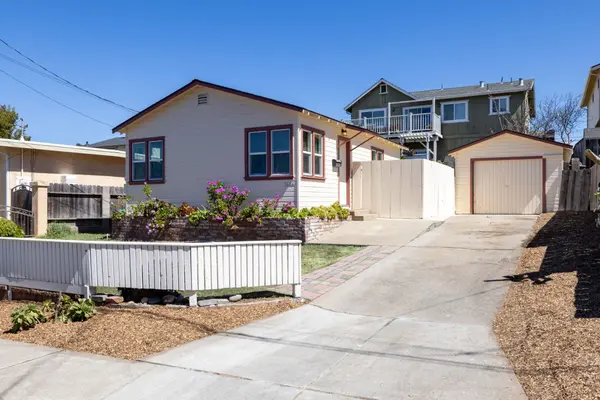
When buyers look at a property, they are seeing a physical landscape shaped by decades of use. Fences are built where it made sense at the time. Landscaping grows organically. Driveways follow topography rather than legal geometry.
Over time, these choices create the appearance of certainty.
But legal boundaries are not drawn with hedges or fences. They are drawn with written descriptions, maps, and measurements that live on paper, often created long before the current improvements existed.
The result is a subtle but important gap between what "looks true" and what is legally defined.
What Title Insurance Actually Insures When It Comes to Boundaries
Title insurance insures the legal description of the property as recorded. It protects you if someone else has a valid, recorded claim to ownership of the land you purchased.
It does not guarantee that visible features align with that description.
If a fence is slightly over the line. If a neighbor’s driveway encroaches a few feet. If a shed was built decades ago without reference to the legal boundary. These issues may exist without triggering a title defect.
Title insurance is concerned with ownership rights, not physical placement of sturctures or features.
This distinction matters because many boundary disputes arise not from ownership challenges, but from use and assumption.
Surveys: What They Do, and What They Don’t
A survey is a professional measurement of a property’s boundaries based on the legal description and physical markers. It translates the abstract language of title into a map that can be walked on the ground.
Surveys can reveal:
-
Encroachments
-
Overlaps or gaps between parcels
-
Differences between recorded boundaries and visible features
-
The precise location of easements
In many (if not most) cases, buyers do not end up ordering surverys. In their minds, nothing appears wrong, so why look closely? That's valid.
Whether or not surveys are "needed" depends on how the property is used and what the new buyer plans to do.
The Illusion of the “Obvious” Boundary
One of the most persistent myths in real estate is that long-standing use creates certainty.
A fence that has been in place for forty years can still be misplaced. A driveway everyone agrees “belongs” to one house can still cross a legal line. Landscaping that feels permanent can still sit on someone else’s land.
In some cases, long-standing use can evolve into legal rights through doctrines like adverse possession or prescriptive easements. But those are legal processes with strict requirements. They do not happen automatically.
Assumption is not the same as ownership.
Why Boundary Issues Surface Late
Boundary questions rarely arise at purchase. They surface later.
They surface when someone wants to build an addition. When a neighbor sells and a new owner asks questions. When a lender requests a survey for a refinance. When a buyer’s buyer looks more closely than the last one did.
At that point, what felt settled can suddenly feel ambiguous. All it takes is one person to ask a question.
Local Nuance: Older Parcels and Topography
In established coastal markets like the Monterey Peninsula, boundary complexity is common.
Many parcels were created decades ago, using measurement standards and mapping practices that predate modern surveying technology. Steep slopes, irregular coastlines, and winding roads make perfect rectangles impractical.
Private roads, shared access points, and layered easements further complicate physical clarity.
None of this is inherently risky. It simply means that precision often lives on paper rather than on the ground.
Fences Are Not Legal Instruments
It is worth stating plainly: fences are not boundary declarations.
They are physical improvements built for privacy, safety, or aesthetics. They may align with legal boundaries, but they do not define them.
This becomes especially relevant when fences are replaced, upgraded, or disputed. A neighbor who has always assumed a fence marked the line may be surprised to learn otherwise.
Title insurance does not resolve these disputes. Surveys inform them.
When a Survey Matters
Not every transaction requires a survey. But certain scenarios elevate their importance.
For example:
-
Properties with shared driveways or access routes
-
Irregularly shaped or hillside lots
-
Homes near coastal bluffs or setback lines
-
Plans to build additions, fences, or ADUs
-
Properties where improvements sit close to assumed boundaries
In these cases, the cost of a survey is often small compared to the cost of resolving a boundary issue later.
How Easements Complicate the Picture
Easements add another layer of abstraction.
An easement may grant rights over part of a property that look, feel, and function like someone else’s space. Utility corridors, access routes, and shared infrastructure can cut across legal boundaries.
A survey will typically show easement locations clearly. Title insurance will insure that those easements were properly recorded.
What neither will do is make those easements disappear.
Understanding how boundaries and easements interact is part of understanding what you are actually buying.
Boundary Disputes Are Rare, But They Are Memorable
Most homeowners never experience a serious boundary dispute. But when they do, it tends to be emotionally charged and expensive.
The conflict is rarely about a few feet of land. It is about assumptions, expectations, and the shock of discovering that something believed to be settled is not.
Early clarity prevents late conflict.
Precision Is a Tool, Not a Guarantee
Even a survey is not a promise of permanent peace. It is a snapshot in time, based on current records and conditions.
But it is a valuable snapshot.
It allows buyers to make informed decisions, rather than assumed ones. It replaces visual certainty with measured clarity and respect for the complexity of the land.
Categories
Recent Posts









GET MORE INFORMATION
